Showing posts with label Blues. Show all posts

Tuesday, May 2, 2017

Muddy Waters:

McKinley Morganfield A.K.A. Muddy Waters:(1971)

This powerful figure of a man changed everything. Everything. It would be hard to imagine popular music without the influence of Muddy Waters. Hell, the man invented electricity. I got my first real taste of Muddy's music at the age of thirteen when an older friend gave me a cassette tape, The Best of Muddy Waters. I was blown away. This man sounded bulletproof. His music was stylish, and tough, and full of spirit. It's no wonder that he garnered the respect of so many musicians, musicians who came to see him as a father figure. This particular compilation double album, out on Chess Records, is a great collection, well curated and presented. Muddy was the MAN. And, without him, the Rolling Stones might have had a different name. 
I'm drinkin' TNT
I'm smokin' dynamite 
I hope some screwball
Starts a fight
'Cause I'm ready
Ready as any man can be
I am ready for you
I hope you're ready for me

Wednesday, March 29, 2017

Blind Willie McTell:

Atlanta Twelve String:(1972)

A unique, and sophisticated purveyor of the twelve string guitar with a strong voice that carried the ghosts of his time, is one way to describe Blind Willie McTell. Another, is to say he was a polished entertainer who catered to his audience. Either way you're talking about a giant. I found out about McTell through Bob Dylan when I was about fourteen. Now growing up in a rural area in the pre-internet civilization of America, it was hard to find some old Blues records. So I carried the name, Blind Willie McTell, in my mind through countless record shops until I came across this collection of songs in Santa Cruz, CA. 

Now listen to some Blind Willie McTell.

Monday, March 27, 2017

Mississippi Fred McDowell:

I Do Not Play No Rock'n'Roll:(1969)

"...just the straight natural Blues, I do not play no Rock'n'Roll," are the words that greet you on this record, the seventh by Mississippi Fred McDowell. It's worth noting, because Fred always did, that he was actually from Tennessee. In any case, a more adept bottleneck slide player you will not find. To be fair, his style is rooted in the North Mississippi hill country tradition, which is very rhythmic. I think I first learned about McDowell through the Rolling Stones, who covered the song, You Gotta Move, on the album Sticky Fingers. In addition to the Stones, Bonnie Raitt has always sited McDowell as an influence, and his style can be heard in her playing. That said, the most directly connected, and influenced person might be R.L. Burnside. Burnside was a neighbor of McDowell's from the time he was young, and learned the craft of guitar playing at McDowell's feet. There is a sexiness in the rhythmic repetitiveness of the hill country style, it's almost trance like. Put this record on, and feel it.  

Tuesday, March 21, 2017

John Mayall:

Turning Point:(1969)

Empty Rooms:(1969)
USA Union:(1970)
Back To The Roots:(1971)

John Mayall's body of work is interesting. On one hand, he's a Blues revivalist of the highest 1960's order. On the other, he's an inventive artist fusing a deep English Folk Pop sensibility with traditional American Rhythm & Blues and Rock'n'Roll. 

I saw John Mayall perform in Grand Junction, CO, in about 1996. It rained really hard that night, and the roof of the old theatre started leaking. A pool of water formed onstage right by one of the amps. It did not deter anyone performing. Was a great show. 

Of these albums, Empty Rooms might be my favorite. Since I was a kid, and first heard this record, Thinking of My Woman has intrigued me.     

Thursday, February 2, 2017

Leadbelly:

Memorial Vol. 1:(1963)
One simply cannot say enough about the power of Leadbelly, in both voice and legend. I mean, the man sang his way out of prison, twice! There have also been few who's influence has permeated so many genres. I first heard of Leadbelly because of my fascination with the work of Bob Dylan, which lead me to Woody Guthrie, which lead me to Leadbelly.  
It's also worth mentioning that the music on this album is contained on a beautiful piece of red vinyl.

Thursday, November 3, 2016

B.B. King:

Indianola Mississippi Seeds:(1970)
This is the only B.B. King album I own on vinyl. Well, actually I have two copies of this record, and I have various other albums of his on cassettes, and CDs. But this is the only album on vinyl, because, this is my favorite B.B. King album of all time. From the fantastic cover art to the dense production featuring musicians like Russ Kunkel, Carole King, Joe Walsh, and the great Leon Russell. It's also on this album that B.B. delivers a stirring rendition of Leon's song Hummingbird. 
I first read about this album, and saw the cover, in B.B.'s autobiography, Blues All Around Me, an excellent read by the way that I undertook at about fifteen. I started hunting for a copy of this record, finally coming across it at a thrift store for a quarter. To me this album has a magic to it that always brings me up in spirit. 

Wednesday, November 2, 2016

Albert King:

Live Wire/Blues Power:(1968)


Lovejoy:(1971)


Truckload of Lovin':(1976)
The power of Albert King can not be denied. His guitar playing was forceful, as though he was channeling all 6' 7" of his body through his strings. My first encounter with an Albert King recording was at about fourteen. There was a Gibson's discount store near us that sold lots of cassettes. I would read guitar player magazine or Rolling Stone, and every time a musician I admired would mention one of their heroes, I'd scour Gibson's to see if they had anything by that artist. That's how I happened to find a badly reproduced cassette of Born Under A Bad Sign, clearly not licensed. I think I paid $1.99 for it, but it was good enough that I could pick up on what everyone was talking about in regards to this blues slinging guitarist named King.  

Tuesday, October 4, 2016

Lightnin' Hopkins:

Lightnin' Hopkins:(1969)

Double Blues:(1972)
I got my first Lightnin' Hopkins album on a cassette when I was about thirteen on a trip to Denver. I remember it had been harder than I imagined to track down something by the Texas blues great. No one has ever played quite like Lightnin', and that's what jumped out at me on the very first listen. To this day, I've never heard anyone who could pay so laid back, and yet aggressive at the same time in a mesmerizing swirl of hard won rhythm, and life story repeating lead that didn't require a band. But, when a band was added it was so simple and atmospheric that it conjured other worlds out of thin air. I still find the best times to listen to Lightnin' Hopkins to be early in the morning or at night. That to me is the highest honor a purveyor of the Blues can achieve.  

Monday, May 23, 2016

John Lee Hooker:

The Best Of:(1987)

John Lee Hooker was a different kind of cat. Never as flashy as some of his Blues peers, instead coming across as so Earthy and real that his feet seemed planted in the good dirt. His were down and dirty grooves that could be unrelenting. There wasn't the big guitar solos, instead there was a ditch diggin' groove for that sweet thundering voice to ride upon. There's no B.S. from a John Lee Hooker record. Also unlike some of peers, John Lee wasn't afraid to get political in his lyrics, tackling issues like race, and war in a down home way, almost like your Grandfather was talking to you. This is a nice overview kind of album.

Hooker 'N Heat:(1971)

Team a versatile powerhouse of a band like Canned Heat with someone they admire as much as John Lee Hooker, and you've got a seriously classic album on your hands. This album starts off with Hooker by himself playing, seemingly waiting for the band to show up. When they do the camaraderie and the music takes off like a steady rollin' plow. The production values on this album are killer, and take on a cinema verite/fly on the wall style that allows us to hear the conversations before and after songs. This makes for an intimate listening experience.  

One of my favorite quotes came when John Lee was asked why he almost always wore sunglasses on stage, and he replied, they hide the frequent tears that come when I play.

Thursday, May 5, 2016

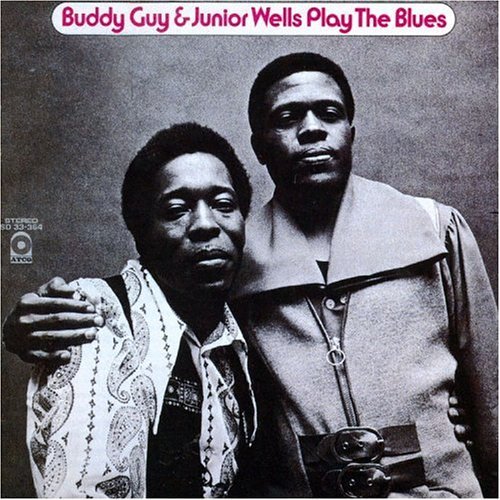
Buddy Guy & Junior Wells:

Play The Blues:(1972)
Well, shit...this is Buddy Guy and Junior Wells, enough said. Two masters in their prime!

Just listen to it!

Friday, April 15, 2016

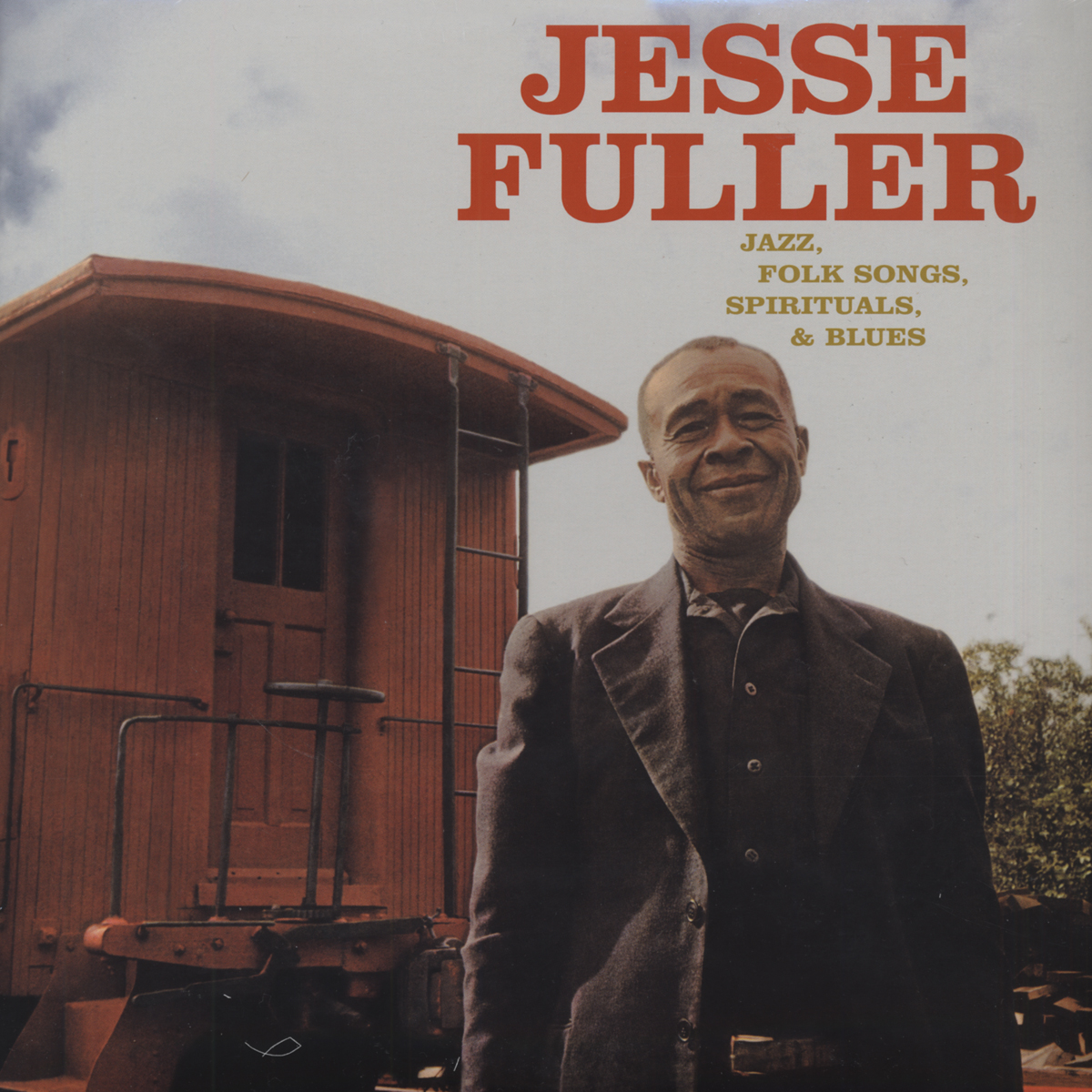
Jesse Fuller:

Jazz, Folk Songs, Spirituals & Blues:(1958)

The Lone Cat:(1961)

I first became aware of who Jesse Fuller was when Eric Clapton covered San Francisco Bay Blues on his Unplugged album. Now...Eric Clapton did not come close to doing the song justice. But, I only found that out once I had heard the original. Fuller was quite the one-man band employing a 12-string guitar, Harmonica, Kazoo, custom built hi-hat, and a Fotdella. What is a Fotdella? It's a six string acoustic bass instrument played with foot pedals. The instrument was invented and built by Fuller out of a necessity for bass accompaniment. A true original.


Monday, March 28, 2016

John Fahey:

Volume 1 Blind Joe Death:(1967)


Oh, yes, the first third record by John Fahey. Let me explain. Blind Joe Death was the very first album released by John Fahey, self-released in 1959. There were not many copies pressed. So after the success of his second album it was decided that we would reissue his first album, but wanted to rerecord some of the tunes. Hence, Volume 1 Blind Joe Death coming back out in 1967. This is a killer album of acoustic instrumental guitar folk blues.

Sunday, March 20, 2016

God Don't Never Change:

The Songs of Blind Willie Johnson:(2016)

A sunday special. 
I picked up this compilation album of various artists covering Blind Willie Johnson songs recently. I had to... It's got Tom Waits, The Blind Boys of Alabama, Lucinda Williams, and a host of others on it. I must admit, as much as I dig this record, some tracks are more interesting than others. The Waits tracks are stand outs. Blind Willie has always been a haunting figure in blues to me. I was thirteen when an older friend gave me a cassette of various blues artists, on that tape was Blind Willie Johnson's Dark Was The Night, Cold Was The Ground. Out from my speakers came a ghost, moaning woefully and playing the rustiest slide guitar I'd ever heard. Unlike all the other artist and songs on that tape, this song felt so intense, and mournful that it almost seemed wrong to listen to it. It was so personal. To this day I consider that to be maybe the penultimate blues tune. I'm so attached to that lyricless version that I was a little disappointed to hear the lyrical version by Rickie Lee Jones that closes this compilation. In any case, this is a very cool record in the collection, and a killer Sunday morning jam.

Thursday, February 18, 2016

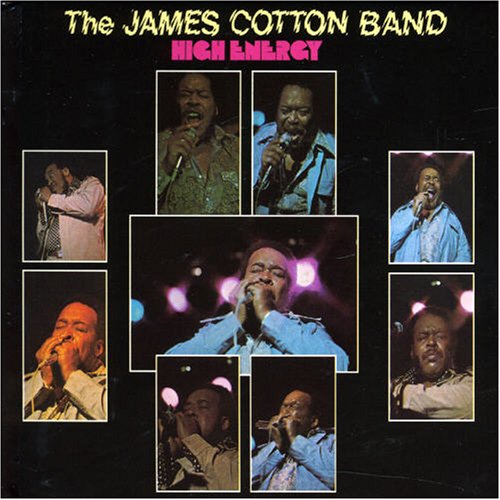
James Cotton:

High Energy:(1975)
Mid-Seventies Blues albums were an interesting blend of blues and R&B, as artists wanted to hit crossover success, and this is the case on this James Cotton album. So in addition to great blues harp playin', you also get some funky guitar work from Matt "Guitar"Murphy, and Allen Toussaint laying down some tasty piano. Highly recommend this album.

Wednesday, February 3, 2016

Commander Cody and His Lost Planet Airmen:

Lost In The Ozone:(1971)
A Country band with a taste of Rock'N'Roll, Western Swing and all Americana. I first bought this album after hearing Hot Rod Lincoln. I will say that the album cover perfectly matches the music contained inside. This is the Country music of dope smokers, and beer drinkers in the 70's. Check out the tracks, Seed and Stems (again), and Lost In The Ozone.


Country Casanova:(1973)
More of the glorious same on this album. Key tracks here: Smoke, Smoke, Smoke (the Cigarette), and the track that got hem banned on country radio, Everybody's Doin' It Now.


Albert Collins:

Ice Pickin':(1978)
There has never been a guitar player that sounded like Albert Collins. I was about thirteen the first time I heard his name or his music, and I was mesmerized. The odd and cool way he kept rhythm by popping his thumb against the low E, and the palm of his hand against the bridge cap of his telecaster was intoxicating. Not to mention the power with which he attacked the instrument. I had many cassettes of his albums, but this one, this one is my favorite. That's why it's one of the only ones I have on vinyl. There's not a back track on this record. I was in Denver at a record sale, and a buddy of mine was selling some records of his. I pulled out this one, and the first Roxy Music album. When I tried to pay him, he said "Ah, Man, I can't take your money. It'll just be nice to know those are going to a good home." Thanks, Justin.

Showdown: (1985)
The interplay between these three is really good. I bought the album because Collins, and Copeland were on it, I've never been a fan of Robert Cray's guitar tone. On this album, it seems like all parties involved had a great time. Key track here would be, Black Cat Bone or Blackjack.

Saturday, January 30, 2016

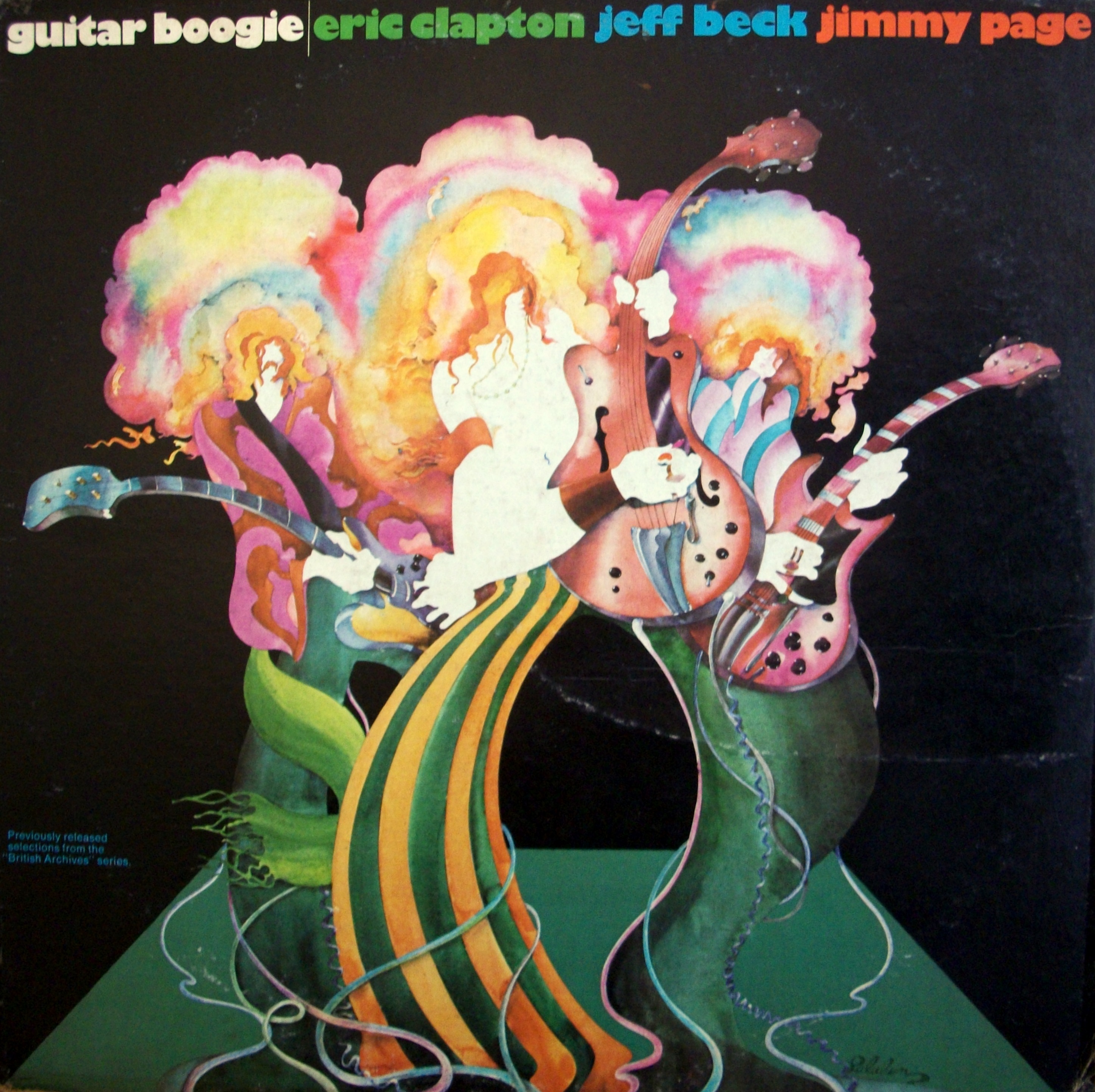
Eric Clapton:

Guitar Boogie:(1971)
Ok, yes, I'm starting off an Eric Clapton post with a compilation album. This is a particularly decent one. There was a time, before I had done any diggin' or learnin' that I was a big Clapton fan, but once I had heard Freddie King, that was over. That said, there are some tasty jams on this record. 

Clapton:(1973)
Another compilation album of early Clapton stuff. Key track on this one is Bell Bottom Blues, which of course is from Layla and Other Assorted Love Songs, which is a killer album.

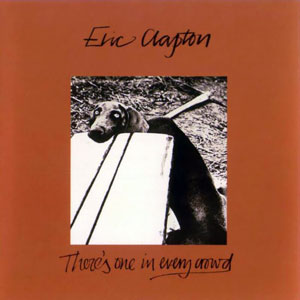
There's One In Every Crowd:(1975)
Eric Clapton's first proper solo album. A mixture of country flavor and reggae. Personally I live Clapton more when he's not playing the guitar hero, and just laying back being the singer rhythm player. Key track: Don't Blame Me

E.C. Was Here:(1975)
A live album containing six jammed out tracks. Check out Further On Up The Road, which is good, but doesn't come close to the awesomeness of the performance from The Last Waltz.

No Reason To Cry:(1976)
The second proper solo album. I really like this one, like I said, I like Clapton best when he's just singing, and playing, and that's what you get here. Oh yeah, and Ron Wood, Robbie Robertson, Rick Danko, and Richard Manuel are backing Clapton up. Favorite track on this album is the duet with Bob Dylan on Sign Language. 

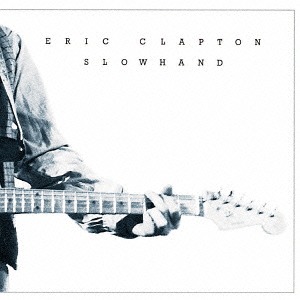
Slowhand:(1977)
Every artist has that big career defining album, the one they'll never escape, and this is Clapton's. Spawning three huge radio hits, and selling the most copies of any Clapton album. See: Cocaine, Wonderful Tonight, and Lay Down Sally.

Backless:(1978)
This may be my favorite Clapton solo album, from the cover to the music. Side A and B start off with Bob Dylan songs you can only find here. But, perhaps my favorite track is Promises.

Money And Cigarettes:(1983)
And in come the 80's... In comes the transition to overly smooth, middle aged, don't rock the boat...


Thursday, December 17, 2015

Canned Heat:

Boogie With Canned Heat:(1968)
The music of Canned Heat brings up memories of family vacations. I've said before, I'm lucky my folks had decent taste in music. There have been few white blues bands that could groove the way Canned Heat (in the original line-up) could. But what always seemed to set them apart was Bob Hite's amazing voice. The way he could go from gruff and gravel to high and sweet was otherworldly. Key songs here are Fried Hockey Boogie, and On The Road Again. As a side note, I'd like to say, Larry Taylor, alias 'The Mole', is one of my favorite Bass Players of all time, ha has made his presence known on many Tom Waits albums I hold dear.

Historical Figures And Ancient Heads:(1971)
Canned Heat suffered many line-up changes, all the way up to the present. On this album, only Bob Hite, Henry Vestine, and Aldolfo de la Parra are left from the original line-up, but that don't mean they can't still tear it up. Check out the lead off track, Sneakin' Around. Or how about, Rockin' With The King? That's Little Richard on piano. How about that?

J.J. Cale

Really:(1972)
How do you describe the music of J.J. Cale? Well, laid back...in vocal approach, and guitar playing, but still pointed and biting. As a kid every time I heard Cale, I imagined him sitting in a chair half asleep communing with some other realm. Now if you're reading this, and don't know who J.J. Cale is...remember, After Midnight, Cocaine, Call Me The Breeze? He wrote them. Hell, even the good Captain Beefheart covered I Got The Same Old Blues. If I had to pick key tracks off this, his second album; Everything Will Be Alright, and Going Down.

Troubadour:(1976)
This is the album that gave the world Cocaine, but I prefer Ride Me High from this collection. As always, is it blues? Is it rock? Is it country? Is it jazz? No it's just J.J. Cale.

5:(1979)
This is my favorite J.J. Cale album. It's murky. It's got a mist of danger on it. It's got the song, I'll Make Love To You Anytime. I was once supposed to open for J.J. Cale on one of his last tours, but then he had to cancel the date due to illness. Needless to say, I was disappointed. Cale was a gifted musician, and songwriter who lurked in the shadows, but relished the beams of light that cut through. Or at least that's my opinion from years of listening to his work. 


Wednesday, December 2, 2015

The Blues Brothers:

The Blues Brothers: (1980)
Normally I would have a record like this in the soundtrack section, but this particular soundtrack was so influential on me that it got moved up. A brilliant movie it was, and still is...I intentionally overlook the atrocious sequel from 2000. Ok, back to this record. This record hipped me to Stax, Ray Charles, John Lee Hooker, Aretha Franklin, and Cab Calloway. As a kid I heard it, and actively sought out records by all these people. What more needs to be said?