Showing posts with label music. Show all posts

Tuesday, February 16, 2016

Stewart Copeland:

The Rhythmatist:(1985)
Stewart Copeland is a fabulous drummer/percussionist, and like many with such a bent, he turned to exploration in African music. However, unlike a lot of musicians, his pockets allow him to actually go there, and jam, record, and explore with the locals. Hence, The Rhythmatist. This is actually a pretty good record, aside from some of the 80's production choices...i.e. gated reverb etc. Side A is stronger than B. Key track here for me is Koteja (Oh Bolilla).

Monday, February 1, 2016

Leonard Cohen:

Songs of Leonard Cohen:(1967)
The master of language, the serious mystic, a man named Leonard Cohen. It's hard to put into words how much Leonard's music and writing mean to me. This first album sets the scene so well with the gentle nylon string guitar dancing between the fabulous orchestration. 


Songs From A Room:(1969)
Leonard Cohen seems at once of, and not of the real world we call the Earth. A master of language and subtlety like no other. I first got turned on to him when Jackson Browne made reference to him in an interview, more specifically the song Famous Blue Raincoat. As I’ve stated before, I love studying the influences of my influences, so I dug through the Cohen catalogue with much fascination and joy. Songs From A Room is particularly interesting, not just for the intense lyrical content, but the mysterious back cover depicting Cohen’s then girlfriend Marianne, of whom he sang. In that picture I could see how he could fall in love with her...I fell in love with her in that picture. I fell in love with the idea of an artist that could create this masterpiece of an album that seemed so removed from all its contemporaries. It’s an album that to me sounds as good today as it ever did, which focused me on the timeless quality I dig in so many records. I remember putting on this album while driving to take my SAT exam. My mind roaming the vast countryside conjured by the songs, and not thinking of the test that others said was important. I certainly never said that it was important. I remember thinking what a waste of time all the testing was. I didn’t want more schooling. I believed then as I do now, that I was getting more from the music I was listening to than I was from all that school and testing. There’s an element to this album that reminds me of a Fellini film like 8 1/2, black & white and highlighting the serious absurdity underlying some difficult issues.


Live Songs:(1973)
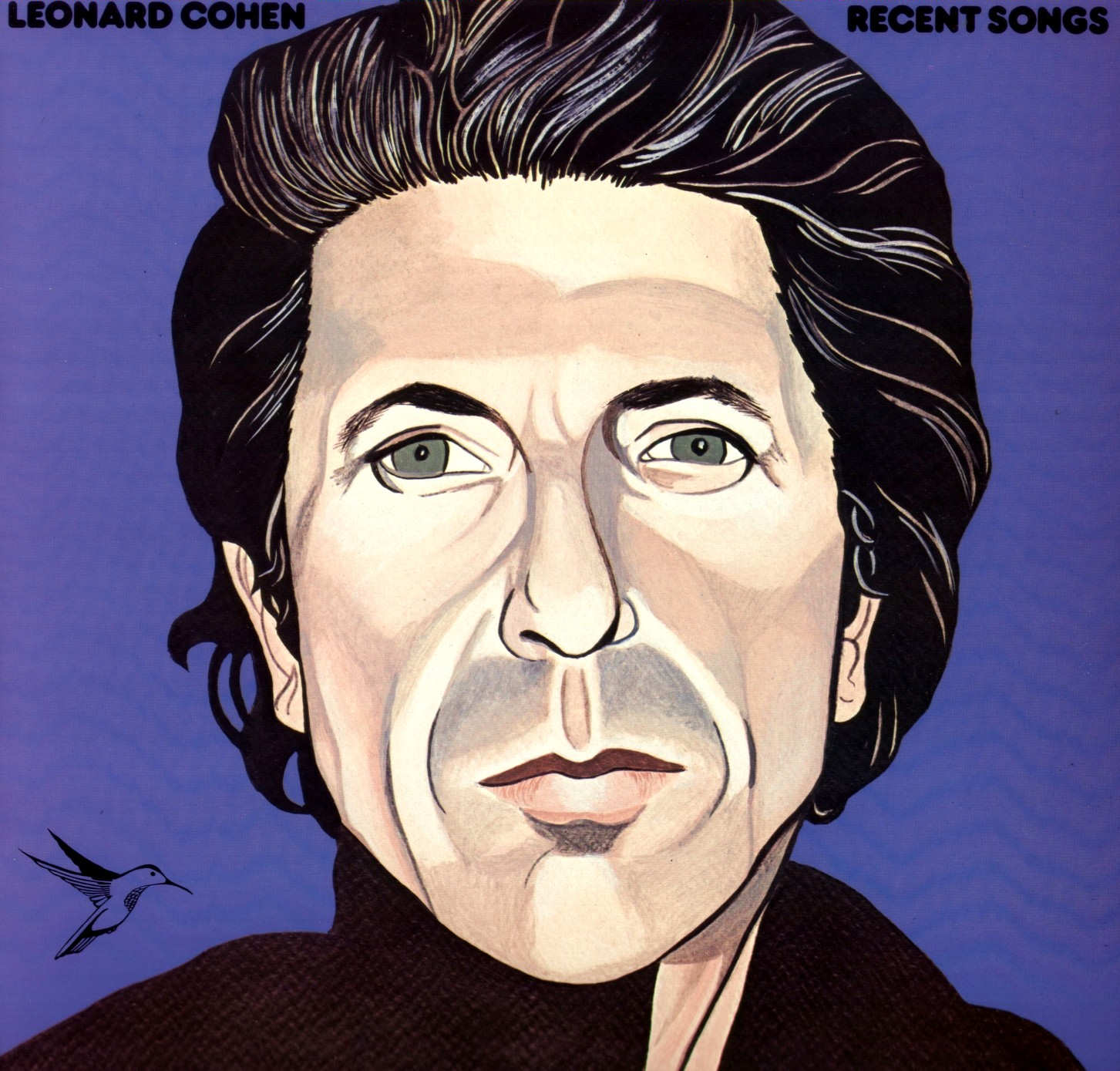
Like a ghost staring out of a bathroom mirror, so Leonard Cohen looks out of this album cover, so much power contained in his eyes. A cigarette before taking the stage for a live performance that seems more like a communal campfire gathering than anything else. The record is aged and crackling like a fire. 


Recent Songs:(1979)
"I came so far for beauty
I left so much behind
My patience and my family
My masterpiece unsigned"

Friday, January 22, 2016

Captain Beefheart:

Lick My Decals Off, Baby: (1970)
Oh, yes, the good Captain... A polarizing figure to say the least. There are lots of musicians that proclaim their music to be art, and it is, but there are few willing to allow their art to be ragged, grating, and abstract the way Captain Beefheart did. Trout Mask Replica is a modern masterpiece..."A squid eating dough in a polyethylene bag is fas and bulbous"... However, Lick My Decals Off, Baby, may be my favorite. This album is less red, and more blue, and blue is my favorite color. The tunes stir a dirtier groove based stew than Trout Mask, making for a rare moment when a group of white boys has been able to push the boundaries of the blues. Check out I Love You, You Big Dummy, or The Clouds Are Full Of Wine (Not Whiskey or Rye).

Shiny Beast (Bat Chain Puller):(1978)
So Captain Beefheart recorded an album called Bat Chain Puller, and the record lable (owned by Zappa) didn't want to release it...So Beefheart made a different album, Shiny Beast (Bat Chain Puller). He stood by that the original album he turned in was better that this, the released version. So it goes in business. I love this album, so I guess that makes it my second favorite. Anyway, artwork on the cover (by Beefheart) and the song Bat Chain Puller are worth the price of admission. Actually both versions of Bat Chain Puller, the one here and on the first recording of this album, are killer. Another track to check out, When I See Mommy I Feel Like A Mummy, sounds like an influence on Primus to me.

It Comes To You In A Plain Brown Wrapper: (2008)
So, in 1967 Beefheart planed for his second album to be a double album called It Comes To You In A Plain Brown Wrapper Marked Personal, but his label said, NO. What ended up coming out on Strictly Personal was a bastardized version, and the Good Captain felt was inferior to his initial idea. Flash forward to 2008, and we get It Comes To You In A Plain Brown Wrapper, a collection of tracks that didn't make the cut for the Strictly Personal album release, and outtakes from other albums. I dig the two different takes of Safe As Milk, and Flower Pot. Overall, I think this is an interesting collection, that allows a small glance into the evolution of some of the Captain's working process. 


Thursday, December 17, 2015

J.J. Cale

Really:(1972)
How do you describe the music of J.J. Cale? Well, laid back...in vocal approach, and guitar playing, but still pointed and biting. As a kid every time I heard Cale, I imagined him sitting in a chair half asleep communing with some other realm. Now if you're reading this, and don't know who J.J. Cale is...remember, After Midnight, Cocaine, Call Me The Breeze? He wrote them. Hell, even the good Captain Beefheart covered I Got The Same Old Blues. If I had to pick key tracks off this, his second album; Everything Will Be Alright, and Going Down.

Troubadour:(1976)
This is the album that gave the world Cocaine, but I prefer Ride Me High from this collection. As always, is it blues? Is it rock? Is it country? Is it jazz? No it's just J.J. Cale.

5:(1979)
This is my favorite J.J. Cale album. It's murky. It's got a mist of danger on it. It's got the song, I'll Make Love To You Anytime. I was once supposed to open for J.J. Cale on one of his last tours, but then he had to cancel the date due to illness. Needless to say, I was disappointed. Cale was a gifted musician, and songwriter who lurked in the shadows, but relished the beams of light that cut through. Or at least that's my opinion from years of listening to his work. 


Wednesday, December 16, 2015

John Cage:

Variations IV, Vol. II (assisted by David Tudor): (196?)
Culled from the wildly popular marathon of a six hour concert at Feigen-Palmer Gallery in L.A. in 1965, this album mixes Cage and associates live performance with audience sound to create a vast auditory painting. A spectacular representation of Cage's belief that any sound or combination of sounds can be music that is completely free from rule, law or dogma. Listening to this record you hear the birth of sampling. Cage was a fearless pioneer on many fronts. 

Etudes Boreales (1978) Ryoanji (1983): (1985)
It's been said that minimalist art makes people the most uncomfortable. If you feel that way, then this record is not for you. John Cage believed in the use of silence, which is put to good use here on record one, Etudes Boreales, first with solo prepared piano, and then with solo cello. In this minimalist composition it becomes inevitable that your mind will fill in the pauses, and rest with sounds from your surrounding. Even the slight pops and clicks of the vinyl seemed planned. Side three combines the two solo instruments into a dance like conversation. Record two, side two, Ryoanji, is a 20 plus minute composition for voice and percussion. Slightly less minimalistic, but still representative of Cage's taste and style emitting a grace in its execution that is as soothing as a breathing exercise. While this music may be a turn off to some, I find it relaxing, and incredibly visual. 

David Byrne:

The Catherine Wheel: (1981)
An early excursion outside of Talking Heads for David Byrne, The Catherine Wheel, was commissioned by Twyla Tharp for a dance production. This album features some familiar Talking Heads associates namely, Adrian Belew, Bernie Worrell, and Brian Eno. This is a fabulous rhythmic fun ride of an album that is in no short supply of funk, and a cool reworking of What A Day That Was. Key tracks for me: My Big Hands, and Eggs In A Briar Patch.

Wednesday, December 9, 2015

The Dave Brubeck Quartet:

Countdown Time In Outer Space:(1962)
If you're looking for Cool Jazz, Dave Brubeck had it in spades, this just happens to be the only piece I have on vinyl. His records, especially from this time period, are impeccable. I always felt that whoever was choosing the art for these albums was doing a pretty awesome job, because they seem to go together perfectly, even though they were created independently. Just go listen.

Buffalo Springfield:

Buffalo Springfield: (1967)
Stephen Stills and Neil Young have no doubt had a big influence in my life as musicians, mainly through CSN&Y, and Neil's solo albums, but the story kind of starts here with the first Buffalo Springfield album. The band weren't happy with this album, believing it to be less intense than their live shows. It is fairly mellow. Originally released in '66, this is the rereleased version from '67. After For What It's Worth became a hit the record company figured they'd better rerelease this album with the hit tacked on. If I could only hear two songs from this album, I'd go with Burned, and Out of My Mind.

Last Time Around: (1968)
Any album that starts with such a great folk-rock take on a Motown riff like this album does with On The Way Home, has to be good. Though this was the last Buffalo Springfield album, it clearly foreshadows the vibe that would later be perfected by CSN&Y. In fact, this album was really just contract fulfillment. Not one of these tracks features full band performances, because, they weren't a group at this time. They couldn't even be bothered to all show up for a cover photo. So one had to be collaged together. My two track pick for this one; I Am A Child, and Kind Woman.

Retrospective:The Best of Buffalo Springfield: (1969) 


Tuesday, December 8, 2015

Buckingham Nicks:

Buckingham Nicks:(1973)
I could never understand why this album was never rereleased, because, it's pretty awesome, in a 70's studio pretty voice kind of way. Ok, I love this album, I'll say it. Sure they later recut some of these songs for Fleetwood Mac records, but the versions on this album are the ones I think are stronger. These tunes seem more honest, and certainly less decadent than what would go down in Fleetwood Mac. Now, when I was first digging through my parents' record collection, it was not the music that drew me to this album... This kids, is why cover art is important. *wink,wink* Anyway, this album is hard to find. I've been looking for a second copy for a while, but finding a clean copy is tantamount to finding ant's teeth. 

Jackson Browne:

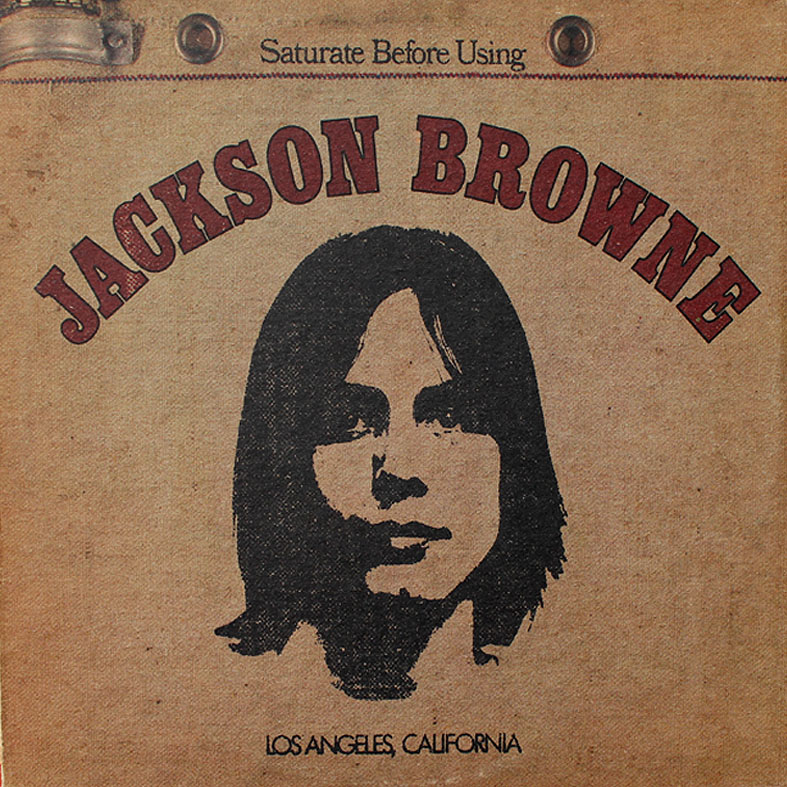
Jackson Browne (a.k.a Saturate Before Using): (1972)
Late For The Sky:(1974)
While I have almost every Jackson Browne album in the house in some form or another, these are the only two I have on vinyl, well, I have two copies of Jackson Browne on vinyl, so these three. Anyway, these are my two favorites. When I first got in to songwriting, my Dad asked if I'd ever listened to Jackson Browne, and when I said, no not really, he dug out his copy of Jackson's first record. Instantly I mistook, like so many others before me, the title of the record to be, Saturate Before Using. (It would be a few years before I corrected my mistake.) In it I heard lyrics that spoke to the searching feeling I had in my own teenage self, and painted a different songwriting path than I had known from Bob Dylan records. When I got a copy of Late For The Sky, I was floored. It was a masterpiece. Lyrically richer, more world weary, and cinematic than his first two records. Not to mention a cover that contained as much mystery as you could ask for, especially when you hear the car door slam at the end of The Late Show. That moment blurred the lines between the music, and the cover in such a beautiful way. Late for the Sky remains in my all time Top Ten album list.

Wednesday, December 2, 2015

The Bonzo Dog Doo Dah Band:

I'm The Urban Spaceman; The Very Best of: (1984)
The Bonzo Dog Doo Dah Band. Just saying the name makes you smile. If you think you don't know this 60's art school band, well maybe you're right, but you've probably seen them in the strip joint/club the Beatles and their mystery tour guest go into in The Magical Mystery Tour. And their influence can be felt in bands like Roxy Music, and Death Cab For Cutie. The latter taking their name from a Bonzo Band song by the same title. George Harrison sited them as his favorite band. My favorite tune in this collection has to be "Hunting Tigers Out In India". Look it up now!

Sonny Bono:

Inner Views:(1967)
The talented half of Sonny & Cher, and the one with the higher voice, Sonny Bono. This was his first solo album, and is very much a product of 1967, in the best possible way. It features Sonny's ornately decorated pop tunes with tunes like, I Would Marry You Today. A style he was brilliant at. But, you can't really talk about this album with out diving into the opening track, which takes up almost the entire first side at 12minutes 15 seconds. Yes, even Sonny was hopping on the psychedelic bandwagon. When I listen to this album I envision a mythic swinging 60's psychedelic party with bright colors, and lots of booze and drugs, and through the smoke someone says, "Hey Sonny, we need you to cut a record in the next room." And he did! At least that's my take.  

Tuesday, December 1, 2015

Blind Faith:

Blind Faith: (1969)

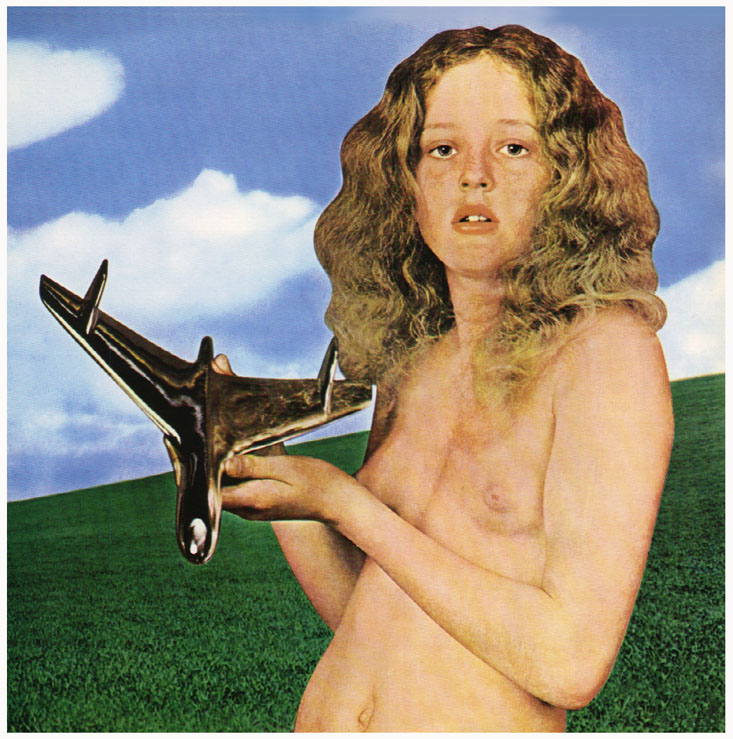
Blind Faith, a pesky "Super Group" made up of members of Cream and Traffic, except...this one works. At least for one album. This album also comes with a legendary controversy over its cover art. Hence the two different ones above. Americans have always been squeamish about nudity, our puritan genes running wild and such. So the record company stateside released the very vanilla cover art of the band sitting around. It was the naughty cover version that fell into my hands at the age of fourteen. All cover art aside, the music on this record overshadows any frivolous BS. I've always found Eric Clapton to work better as a sideman rather than a front, and here who better for him to side for than Steve Winwood. Those soaring vocals on Presence of The Lord, fucking awesome. The guitar exchanges between Winwood and Clapton are incredible. And then when you set all that on top of the Ginger Baker/Ric Grech rhythm section, off to the moon. Can't Find My Way Home is a key track for me, so gentle and understated.  

Monday, November 23, 2015

Black Sabbath:

Paranoid: (1970)
Well, it's a classic, ain't it? I've never been the hugest Sabbath fan, or Ozzie fan for that matter, but this album is a classic. And while it stirred quite a few pots when it was released, it seems fairly tame now. War Pigs is a great political start to any album, and here it establishes Sabbath's second album as arrived more fully formed than their first effort. Paranoid has a youthful honesty to it that they seemed to lose as substance, and fame drove the band to be overcome by their own personas. If you can't name a song off this album, you're probably not much a Rock fan. 

Thursday, November 19, 2015

Big Star:

#1 Record: (1972)

Radio City: (1974)
If you know these records, you love these records. Big Star is one of those bands, like the Velvet Underground, that may not have sold many albums, but everyone who bought one either started or drew their influence into their existing band. It's hard for me to believe these weren't hit records. It's always extremely interesting when a band can tap into making music that's new, but feels familiar. Not in a derivative way, but more in a "I don't know this song, but I feel like I have know it in a past life" kind of way. That's the feeling I got the first time I heard Big Star. I arrived at the Big Star party late, and even when I did it was through the Replacements' invitations on Pleased To Meet Me with songs like, Alex Chilton. These two albums don't feel like two different albums, but rather, a continuation of a conversation with a friend.

Wednesday, November 18, 2015

Dickey Betts:

Richard Betts:
 Highway Call: (1974)
During my period of Allman explorations around the age of 13/14, I picked up three Dickey Betts solo records. The first being Highway Call. A slice of Country Rock with some great players like Vassar Clements, and Chuck Leavell. This album captures Dickey perfecting the laid back country direction he would lead the Allmans into in the wake of Duane's passing.

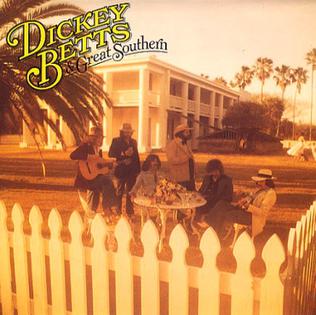
Dickey Betts & Great Southern: (1977)
Think Allman Brothers lite, and that's Dickey Betts & Great Southern. There's some good guitar exchanges, but it's definitely a product of its times, and comes across as dated now. However if you're in the mood for Southern Rock, you could throw this on, and most would probably mistake it for a later Allman Bros. record, tapping their foot. Oh, and Don Johnson (a.k.a. Crockett) sings backup on this album.

Atlanta's Burnin' Down:(1978)
Of the two Great Southern albums I own, I like this one best. It seems more like a separate thing from Dickey's daytime gig (at that time) in the Allmans. The title track is a key track, even if it's a bit of an overdone Civil War ballad. Dealin' With The Devil has an element to it that reminds me of some Zappa tunes, albeit simplified Zappa with a Southern accent. 


Chuck Berry:

On Stage: (1963)
Chuck Berry, one of the fathers of this religion known as Rock'n'Roll, and a formidably force of nature. When I first got an electric guitar the opening riff to Maybelline was one of two riffs I desperately wanted to learn to play. On Stage isn't really a live album, oddly enough, it's a studio album with audience sounds overdubbed on it. Why? I'm not sure. Probably a clever attempt to rerelease some of Chuck's back catalogue. Never the less it's a cool record of previously released tunes, and one alternate take. Another curiosity is that Surfin' USA is listed on the cover, but isn't on the album. In its place is the Berry song Sweet Little Sixteen, the song on which Surfin' USA was based. This to me is such a Punk Rock tactic to try and steal back what was stolen from him, and bring some of that young white audience back with it. Genius!

San Francisco Dues: (1971) 
While Chuck's heyday may have been the late 50's, I find his 70's stuff to be more interesting. The hits had dried up, except for the song My Ding-a-Ling, and the albums during this time period, while searching, seem freer than pervious efforts. Case in point, My Dream (Poem). A six minute recitation that wouldn't be totally out of place on a Lou Reed record. I also like the trend of this era of just adding Wah-Wah guitar for the hell of it, simply because it was the "in" thing to do, and on this record, like so many, interesting things happened.

The London Chuck Berry Sessions: (1972)
Of Chuck Berry's 70's output, this is the high point. Half studio, half live, it was certified gold after being out only two weeks. Mainly because of the success of the single My Ding-a-Ling, a sexually naughty song like only Chuck Berry could make seem so innocent and dirty all at once on radio airwaves. This is a cool album, even if Chuck's voice seems a little worn out, he's still going for it. I saw hime a couple years ago, and he's still going for it, even when he has no real intention of hitting it. So very Rock'n'Roll.

Rock It:(1979)
Will this be the last Chuck Berry studio record? As of right now it looks that way. This is kind of a stagnant album. It seems like the inspiration was running low here. The musicianship is on, but lacking a real spark. The rerecording of Havana Moon is nice. I suppose this is the retirement record for Chuck, even though he has continued to perform regularly up to the present. 


Tuesday, November 17, 2015

Tony Bennett:

I Left My Heart In San Francisco: (1962)
Of the crooners, I dig Tony's voice the most. He has that extra little something. It's a twinkle that's still there these days. But, all that said, this is the only album of his I own. I have a few singles on 78s, but this is the only album. And what an album it is, dreamy, and romantic. It the kind of album that makes you feel a little more cosmopolitan just for listening to it. Now, how many albums, performers can elevate the class of a room? In Sinatra I always heard more Earthly struggle, so much to the point that I could almost see his worldly tether. Tony Bennett has this free unencumbered spirit that effortlessly escapes his mouth every single time he opens it. The kind of voice that would make you feel something even if you were just a bellhop getting a call for room service, "Ah, yes, this is Tony Bennett, I'd like a cheeseburger and a bottle of Beaujolais." "My pleasure mr. Bennett." Of course this album contains a song that would become one of his signature tunes, I Left My Heart In San Francisco, so I don't need to list a key track, you've already got this one in your head.   

Adrian Belew:

Lone Rhino: (1982)
This album was given to me by an older friend who said, "You have to have a copy of this album." I liked Adrian Belew's contributions to Talking Heads, and Bowie albums so of course I took it. Who am I kidding, I rarely turn down vinyl. Usually when an artist described as a guitar wizard, and connected with a band like King Crimson releases an album I find it tedious and over worked. However, that's not the case here. This album is quirky and fun with darkly satirical lyrics. The guitar trickery is mainly used as atmosphere, which I always dig. This album also has a funny surreal cover that I love, and in a rare case, it perfectly fits the music contained in the grooves. If you've never heard this record the tracks to look up are The Lone Rhinoceros, and Big Electric Cat. Those two will tell you all you need to know about this album.

Monday, November 16, 2015

Harry Belafonte:

Mark Twain and Other Folk Favorites: (1954)
There aren't enough words to tell how great Harry Belafonte is as an entertainer, and as a human being. Since I was a kid, I've thought Harry Belafonte was one of the most dignified men I've ever seen. Then the more I learned about his politics, and activism the more I respected this giant of a man. This album, "Mark Twain", is his debut.

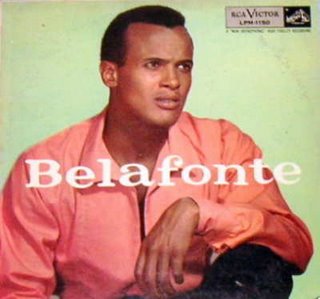
Belafonte: (1956)
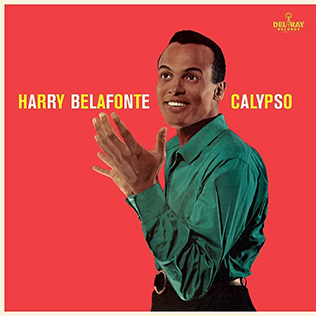
Calypso: (1956)
1956 began a four year run where Belafonte would release two albums a year. These days if anyone can name a song Belafonte did it's usually Day-O (the Banana Boat Song) from the album Calypso. And most know it from Beetlejuice. Calypso was the first album to sell a million copies, and it paved a wide road to popularizing Jamaican and Caribbean music.

Harry Belafonte/The Islanders:
Sings Five Early Songs: (195?)
This is a cool split album between Harry Belafonte (Side A) and the Islanders (side B) that is very much in the vein of his album Calypso.


Belafonte Sings of The Caribbean: (1957)
My Lord What A Mornin': (1959)
Swing Dat Hammer: (1960)
Belafonte uses each album to highlight different groups of people with a deep empathy that msnifests in the sincerity with which he sings. Swing Dat Hammer was a collection of chain gang songs, and it won Belafonte a Grammy.

Belafonte at Carnegie Hall: (1959)
If you were going to own just one Harry Belafonte album, this should probably be the one. It was the first of two albums recorded at Carnegie Hall, and it captures the man in all his glory and commanding stage presence. It was also nominated for an Album of The Year Grammy.

Jump Up Calypso: (1961)
Another cool album by Belafonte. This one features the Trinidad Steel Band.

Midnight Special: (1962)
In addition to an awesomely badass album cover, this album marks the official recording debut of Bob Dylan, who played harmonica on this album.

Streets I Have Walked:(1963)
Calypso In Brass: (1966)
Though Calypso in Brass contains songs Belafonte had perviously recorded, here they have been rearranged with a brass band, which makes this a lively album. Key track here is Zombie Jamboree.