Monday, November 23, 2015

Eubie Blake:

Blues & Rags (his Earliest Piano Roll 1917-1921): (1972)
It's rare to have recordings of someone like Mr. Blake from so far back in time as this. Well, as close as we can get... This record consists of re-recordings of some of Eubie's hand played player piano rolls from 1917-1922. In fact in 1972 when this compilation was assembled Eubie Blake personally oversaw the recording of the player piano to make sure all the tempos were correct. As a musician, Eubie continued to perform until the ripe old age of 96. These tune call to mind silent movies, flickering B&W images that seem so light and happy on the surface, but through the cracks you know there's something darker lurking. Never being loosed, but still peeking out of the closet. Happy haunted music of a by gone era. 

Black Sabbath:

Paranoid: (1970)
Well, it's a classic, ain't it? I've never been the hugest Sabbath fan, or Ozzie fan for that matter, but this album is a classic. And while it stirred quite a few pots when it was released, it seems fairly tame now. War Pigs is a great political start to any album, and here it establishes Sabbath's second album as arrived more fully formed than their first effort. Paranoid has a youthful honesty to it that they seemed to lose as substance, and fame drove the band to be overcome by their own personas. If you can't name a song off this album, you're probably not much a Rock fan. 

Thursday, November 19, 2015

Black Flag:

Everything Went Black: (1982)
This album, this band, is that friend who came to the party just to be disruptive. Just to poke the monkey, and fuck shit up. Then left a treasure map on the kitchen counter of where to find your youthful indignation. With production values that sound like the band is in the next room shaking the walls, nothing is hidden, and all is given away. You need to play this album loud!

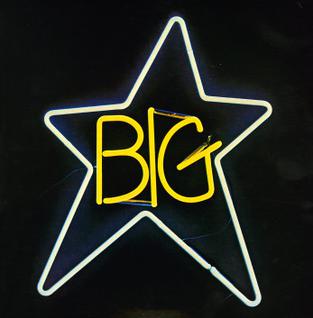
Big Star:

#1 Record: (1972)

Radio City: (1974)
If you know these records, you love these records. Big Star is one of those bands, like the Velvet Underground, that may not have sold many albums, but everyone who bought one either started or drew their influence into their existing band. It's hard for me to believe these weren't hit records. It's always extremely interesting when a band can tap into making music that's new, but feels familiar. Not in a derivative way, but more in a "I don't know this song, but I feel like I have know it in a past life" kind of way. That's the feeling I got the first time I heard Big Star. I arrived at the Big Star party late, and even when I did it was through the Replacements' invitations on Pleased To Meet Me with songs like, Alex Chilton. These two albums don't feel like two different albums, but rather, a continuation of a conversation with a friend.

Wednesday, November 18, 2015

Dickey Betts:

Richard Betts:
 Highway Call: (1974)
During my period of Allman explorations around the age of 13/14, I picked up three Dickey Betts solo records. The first being Highway Call. A slice of Country Rock with some great players like Vassar Clements, and Chuck Leavell. This album captures Dickey perfecting the laid back country direction he would lead the Allmans into in the wake of Duane's passing.

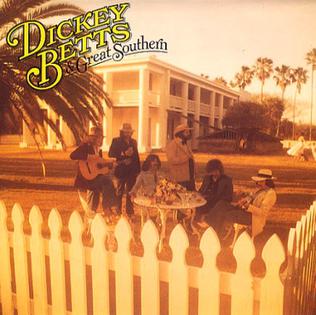
Dickey Betts & Great Southern: (1977)
Think Allman Brothers lite, and that's Dickey Betts & Great Southern. There's some good guitar exchanges, but it's definitely a product of its times, and comes across as dated now. However if you're in the mood for Southern Rock, you could throw this on, and most would probably mistake it for a later Allman Bros. record, tapping their foot. Oh, and Don Johnson (a.k.a. Crockett) sings backup on this album.

Atlanta's Burnin' Down:(1978)
Of the two Great Southern albums I own, I like this one best. It seems more like a separate thing from Dickey's daytime gig (at that time) in the Allmans. The title track is a key track, even if it's a bit of an overdone Civil War ballad. Dealin' With The Devil has an element to it that reminds me of some Zappa tunes, albeit simplified Zappa with a Southern accent. 


Chuck Berry:

On Stage: (1963)
Chuck Berry, one of the fathers of this religion known as Rock'n'Roll, and a formidably force of nature. When I first got an electric guitar the opening riff to Maybelline was one of two riffs I desperately wanted to learn to play. On Stage isn't really a live album, oddly enough, it's a studio album with audience sounds overdubbed on it. Why? I'm not sure. Probably a clever attempt to rerelease some of Chuck's back catalogue. Never the less it's a cool record of previously released tunes, and one alternate take. Another curiosity is that Surfin' USA is listed on the cover, but isn't on the album. In its place is the Berry song Sweet Little Sixteen, the song on which Surfin' USA was based. This to me is such a Punk Rock tactic to try and steal back what was stolen from him, and bring some of that young white audience back with it. Genius!

San Francisco Dues: (1971) 
While Chuck's heyday may have been the late 50's, I find his 70's stuff to be more interesting. The hits had dried up, except for the song My Ding-a-Ling, and the albums during this time period, while searching, seem freer than pervious efforts. Case in point, My Dream (Poem). A six minute recitation that wouldn't be totally out of place on a Lou Reed record. I also like the trend of this era of just adding Wah-Wah guitar for the hell of it, simply because it was the "in" thing to do, and on this record, like so many, interesting things happened.

The London Chuck Berry Sessions: (1972)
Of Chuck Berry's 70's output, this is the high point. Half studio, half live, it was certified gold after being out only two weeks. Mainly because of the success of the single My Ding-a-Ling, a sexually naughty song like only Chuck Berry could make seem so innocent and dirty all at once on radio airwaves. This is a cool album, even if Chuck's voice seems a little worn out, he's still going for it. I saw hime a couple years ago, and he's still going for it, even when he has no real intention of hitting it. So very Rock'n'Roll.

Rock It:(1979)
Will this be the last Chuck Berry studio record? As of right now it looks that way. This is kind of a stagnant album. It seems like the inspiration was running low here. The musicianship is on, but lacking a real spark. The rerecording of Havana Moon is nice. I suppose this is the retirement record for Chuck, even though he has continued to perform regularly up to the present. 


Tuesday, November 17, 2015

Tony Bennett:

I Left My Heart In San Francisco: (1962)
Of the crooners, I dig Tony's voice the most. He has that extra little something. It's a twinkle that's still there these days. But, all that said, this is the only album of his I own. I have a few singles on 78s, but this is the only album. And what an album it is, dreamy, and romantic. It the kind of album that makes you feel a little more cosmopolitan just for listening to it. Now, how many albums, performers can elevate the class of a room? In Sinatra I always heard more Earthly struggle, so much to the point that I could almost see his worldly tether. Tony Bennett has this free unencumbered spirit that effortlessly escapes his mouth every single time he opens it. The kind of voice that would make you feel something even if you were just a bellhop getting a call for room service, "Ah, yes, this is Tony Bennett, I'd like a cheeseburger and a bottle of Beaujolais." "My pleasure mr. Bennett." Of course this album contains a song that would become one of his signature tunes, I Left My Heart In San Francisco, so I don't need to list a key track, you've already got this one in your head.