Thursday, December 17, 2015

Canned Heat:

Boogie With Canned Heat:(1968)
The music of Canned Heat brings up memories of family vacations. I've said before, I'm lucky my folks had decent taste in music. There have been few white blues bands that could groove the way Canned Heat (in the original line-up) could. But what always seemed to set them apart was Bob Hite's amazing voice. The way he could go from gruff and gravel to high and sweet was otherworldly. Key songs here are Fried Hockey Boogie, and On The Road Again. As a side note, I'd like to say, Larry Taylor, alias 'The Mole', is one of my favorite Bass Players of all time, ha has made his presence known on many Tom Waits albums I hold dear.

Historical Figures And Ancient Heads:(1971)
Canned Heat suffered many line-up changes, all the way up to the present. On this album, only Bob Hite, Henry Vestine, and Aldolfo de la Parra are left from the original line-up, but that don't mean they can't still tear it up. Check out the lead off track, Sneakin' Around. Or how about, Rockin' With The King? That's Little Richard on piano. How about that?

J.J. Cale

Really:(1972)
How do you describe the music of J.J. Cale? Well, laid back...in vocal approach, and guitar playing, but still pointed and biting. As a kid every time I heard Cale, I imagined him sitting in a chair half asleep communing with some other realm. Now if you're reading this, and don't know who J.J. Cale is...remember, After Midnight, Cocaine, Call Me The Breeze? He wrote them. Hell, even the good Captain Beefheart covered I Got The Same Old Blues. If I had to pick key tracks off this, his second album; Everything Will Be Alright, and Going Down.

Troubadour:(1976)
This is the album that gave the world Cocaine, but I prefer Ride Me High from this collection. As always, is it blues? Is it rock? Is it country? Is it jazz? No it's just J.J. Cale.

5:(1979)
This is my favorite J.J. Cale album. It's murky. It's got a mist of danger on it. It's got the song, I'll Make Love To You Anytime. I was once supposed to open for J.J. Cale on one of his last tours, but then he had to cancel the date due to illness. Needless to say, I was disappointed. Cale was a gifted musician, and songwriter who lurked in the shadows, but relished the beams of light that cut through. Or at least that's my opinion from years of listening to his work. 


Wednesday, December 16, 2015

John Cage:

Variations IV, Vol. II (assisted by David Tudor): (196?)
Culled from the wildly popular marathon of a six hour concert at Feigen-Palmer Gallery in L.A. in 1965, this album mixes Cage and associates live performance with audience sound to create a vast auditory painting. A spectacular representation of Cage's belief that any sound or combination of sounds can be music that is completely free from rule, law or dogma. Listening to this record you hear the birth of sampling. Cage was a fearless pioneer on many fronts. 

Etudes Boreales (1978) Ryoanji (1983): (1985)
It's been said that minimalist art makes people the most uncomfortable. If you feel that way, then this record is not for you. John Cage believed in the use of silence, which is put to good use here on record one, Etudes Boreales, first with solo prepared piano, and then with solo cello. In this minimalist composition it becomes inevitable that your mind will fill in the pauses, and rest with sounds from your surrounding. Even the slight pops and clicks of the vinyl seemed planned. Side three combines the two solo instruments into a dance like conversation. Record two, side two, Ryoanji, is a 20 plus minute composition for voice and percussion. Slightly less minimalistic, but still representative of Cage's taste and style emitting a grace in its execution that is as soothing as a breathing exercise. While this music may be a turn off to some, I find it relaxing, and incredibly visual. 

David Byrne:

The Catherine Wheel: (1981)
An early excursion outside of Talking Heads for David Byrne, The Catherine Wheel, was commissioned by Twyla Tharp for a dance production. This album features some familiar Talking Heads associates namely, Adrian Belew, Bernie Worrell, and Brian Eno. This is a fabulous rhythmic fun ride of an album that is in no short supply of funk, and a cool reworking of What A Day That Was. Key tracks for me: My Big Hands, and Eggs In A Briar Patch.

Tuesday, December 15, 2015

The Byrds:

Fifth Dimension:(1966)
For their short lived career, and inner band turmoil, the Byrds were a kickass band. And, Fifth Dimension is a classic album. The cover alone is enticing, but then you get Eight Miles High...come on! What makes this album a strong one is that the tracks you weren't going to hear on the radio are just as good as the ones you did. Check out Wild Mountain Thyme, I Come And Stand At Every Door, or 2-4-2 Fox Trot.

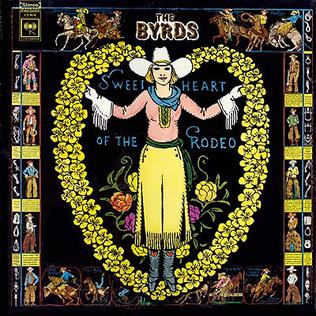
Sweetheart Of The Rodeo: (1968)
Some forces are so strong even trees bend in their wake, so it was with Gram Parsons. The wayward Georgia boy blew in and changed everything for the Byrds, and after he left the band would never be the same. This album was part of my childhood soundtrack, being one of my folks' favorites. It is a killer album, and helped start an entirely new genre of pop music, Country-Rock, Alt-Country, whatever you want to call it. However, tensions grew to a point that the band fractured, and some left with Gram when his exit came.

Untitled:(1970)
Part Live/part Studio, this album fails to produce the charm of Sweetheart of The Rodeo while holding on to the Country flavored tunes. Still, the song Chestnut Mare is a beautiful song penned by McGuinn and Jacques Levy. 


The Butterfield Blues Band:

In My Own Dream: (1968)
Paul Butterfield was amazing, and always had amazing bands, but this album is fairly uneven. It was his second album in a move to adopt a more jazz/soul sound, which is the cool part of this record. The other blues holdout tracks are what drag this album down. It was also the last album Elvin Bishop played on, which may account for these. The cliche song Drunk Again was written by Bishop. All that said, though, this album is worth the price of admission for the lead off track, Last Hope's Gone, really the entire A side. Now, some may be saying, 'hey, Til, it is called the Butterfield Blues Band.' That's true, and they did some killer blues albums, but this album feels like part of the band wants to expand to be different, and part are just being stalwarts with their feet planted firmly in the sand.  

Wednesday, December 9, 2015

The Dave Brubeck Quartet:

Countdown Time In Outer Space:(1962)
If you're looking for Cool Jazz, Dave Brubeck had it in spades, this just happens to be the only piece I have on vinyl. His records, especially from this time period, are impeccable. I always felt that whoever was choosing the art for these albums was doing a pretty awesome job, because they seem to go together perfectly, even though they were created independently. Just go listen.